Note : This project was a part of the course requirement ECM3999 - Technical Answers for Real World Problems. I am thankful to the course faculty Dr. Vydeki D for her lessons on Design Thinking. The field visits played a crucial role in shaping up the scope of the project. The project was parallely done while studying the 6 month course - ECM3999.
My role included :
Food Detection Module : Trained the algorithm for recognizing Indian Food for the Food Detection module by curating large scale Indian Food Dataset.
People Counting : Explored alternatives available for people counting application.
Case Study on the existing Infrastructure : Me and co-author of our paper did a case study on existing functioning of the Mid Day Meal Scheme
I was the team lead and took charge of the project. Me and the co-author were interested in optimizing the system and deploying it for real time testing. Hence, the project was enhanced post course duration. We presented our findings at the IVCI4.0 During the enhancement phase, I did a systematic UX design (included below) for the end product while the co-author experimented with the Computer Vision models. From the field visits, I formulated the low fidelity paper prototypes for the mobile app while co-author completed led the visual design. The prototype is also available as a website.
Field Visit : Kayar, Tamil Nadu, India
Kayar, is a village in Tamil Nadu, India. Field Visit was conducted to conceptualize the product design revolving around problems of the people of the village. Upon conducting survey and follow-up interviews, I got to learn about the Mid Day Meal Scheme and its functioning. My role in this project was that of a Product Designer, and I was actively involved in Design, Research, Visualization of the project. The village, fortunately, lives by the philosophy of sustaiable living and the people share a common vision to coexist in minimalist environment. They, however, require Government intervention at few areas.
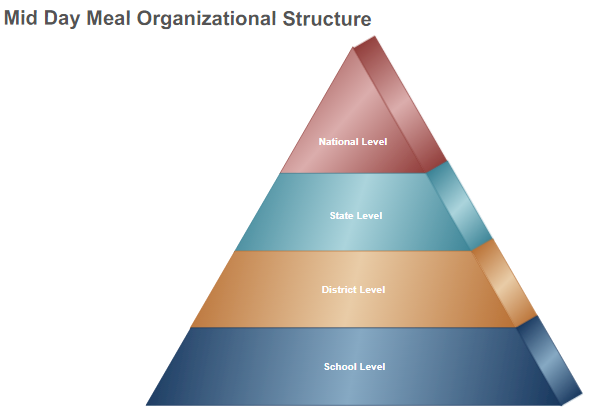
The Mid Day Meal Scheme is a Government initiative to provide Mid Day Meals to School going children. This visionary project was initiated with aim to empower poverty-struck malnourished students. As a part of this scheme, students are provided with Mid Day Meals at the School premises. As with any Government scheme in a developing country, it is only as good as the way it is implemented. This scheme has been running over decades now. As of 2020, there are lots of bureaucratic inefficiencies going on at the Government level that prevent the aid to reach the grassroots. A detailed case study of this scheme was done for Uttar Pradesh, India. The hierarchy of the implementation of this scheme was thoroughly studied.
Competitive Analysis
Over the years, it has been observed that the private organization programmes like the Akshaya Patra Mid Day Meal and the Anna Amrita are more successful whereas government officers are involved in malpractice. The national and the school level have been communicating their sides. It is the district level where the surveillance has not been upto the mark.
As a part of this project, the app design (consisting of features : Food Detection, People Counting and Chatbots) is compared with respect to individual features against the standards followed by their independent industry. The implementaton challenges such as the Government protocols, policies have also been accomodated. Product design is novel and is in contrast to the currrent surveillance mechanisms. The traditional human surveillance is replaced by camera based solutions. The entire functioning of the surveillance of the scheme is refined, keeping the intent and the stakeholders same.
It should be noted that the product is not a stand alone system and does not intend to replace Government bodies associated with the Mid Day Meal scheme. The proposed system improves the existing surveillance and feedback mechanism and helps the Government. Necessary human interventions are required and the whole process could be categorized as semi-automated.
Opportunities & Challenges of Mid Day Meal Surveillance
Opportunities :
To improve the functioning of Mid Day Meal : This project provides useful intervention to the Government initiative and ameliorates the standards of the Government Scheme functioning
To reduce the latency of feedback at the school level : To help the school authorities to report any malpractice or substandard implementation of the scheme.
To maintain a track record of the number of students taking part in the scheme : Students attendance and their participation in the scheme could be digitally examined.
To monitor the nutrition intake of school going children : To ensure that the basic nutrition requirements are met and the enrolled students get a balanced diet.
Challenges :
#1 Infrastructure Requirements : Cameras are required to monitor the number of students and a database of students is required to track the participation of the students.
#2 Seamless Internet Connectivity : Internet Connectivity is still a pressing issue common to the rural areas of India.
#3 Lack of Acceptance : It requires good governance, intent and infrastructure to deploy the system.
#4 Privacy Implications : To maintain the ethical integrity, the identities and the student's data needs to remain confidential.
Interviews and Surveys
Field Visit conducted at Kayar Village provided useful insights and ground truth. With the principles of Design Thinking learnt during the coursework and a series of in-depth interviews with multiple stakeholders provided a solid groundwork for the Ideation and Design phase of the product.
Goals :
What are the pain points of the School authorities?
What are the governmental regulations and mode of operation?
How is the Infrastructure and their level of exposure to the Internet?
What is the level of awareness among various stakeholders?
Keeping these goals in mind, the interviews were conducted. However, it is noteworthy that the responses are not representative of the complete organizational structure. But, it surely initiates a conversation, long anticipated by the school authorities.
Findings from the Surveys and Interviews
We interacted with various stakeholders associated with the scheme. Initial Survey Responses were a baseline for a followup interview depending on their role as an individual. Here are our findings :
Lack of Awareness at the school level : The local residents of the village are not aware of the government policies.
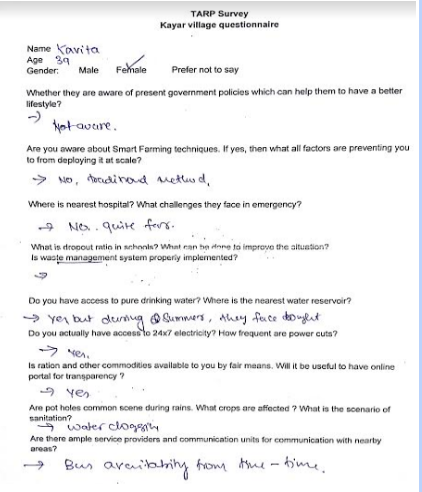
No support from Government : In some cases, people have applied for aid but have not got response from the Government
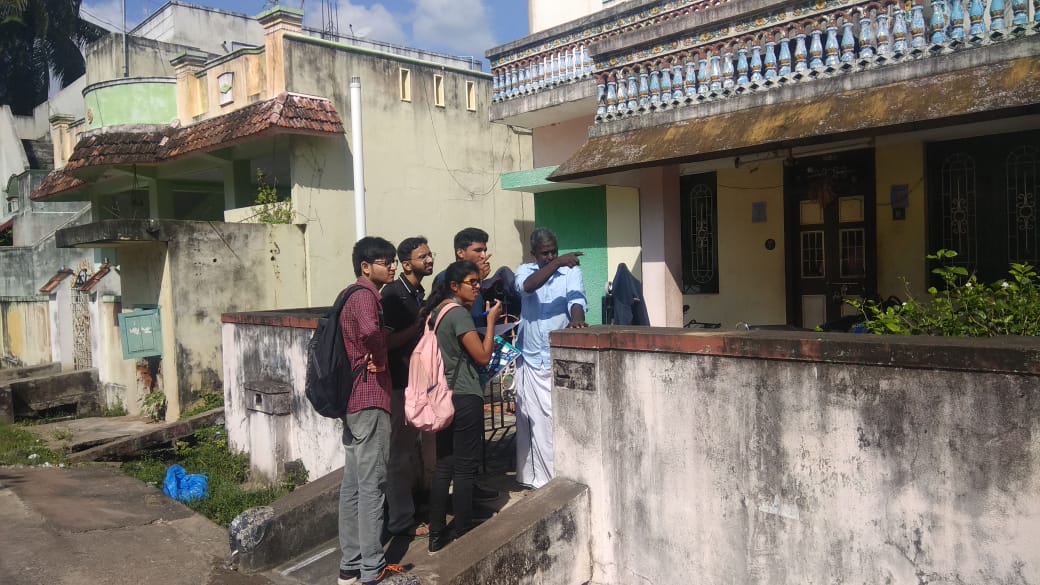
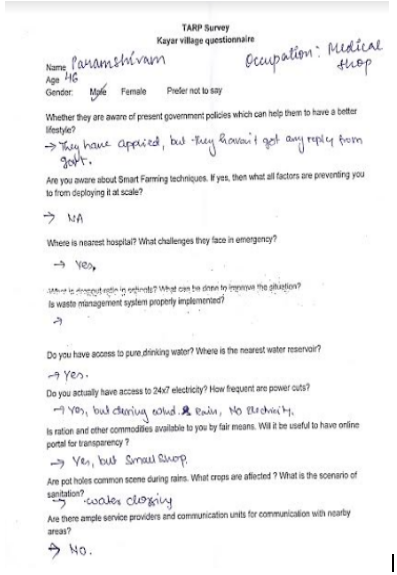
Other problems in Kayar :
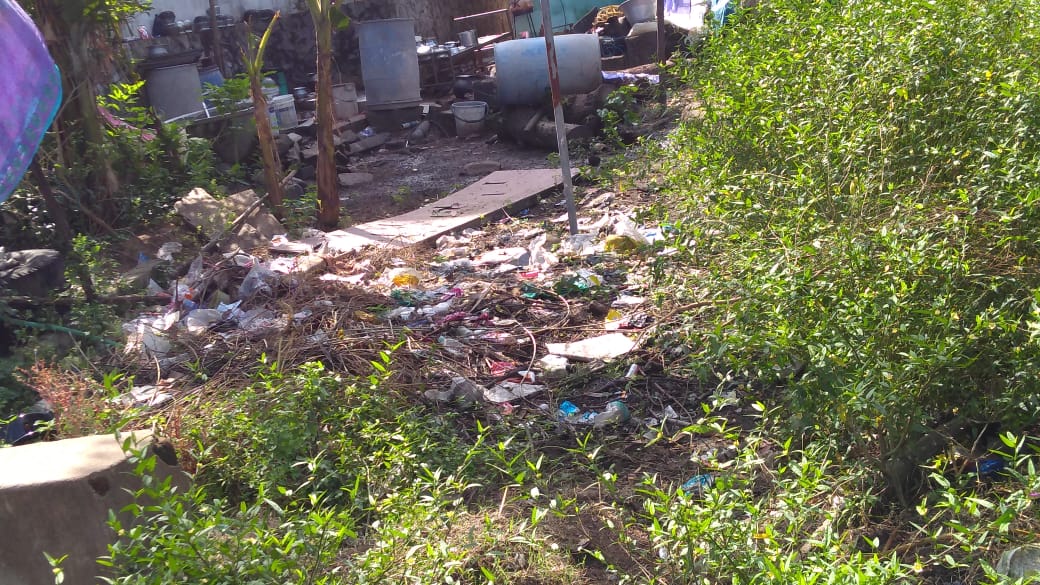
Poor Waste Management : Lack of Cleanliness is a common complaint among all the residents of the village. This could be easily validated as there were unorganized heaps of garbage at random places. The residents are unaware of the Waste Management Techniques.
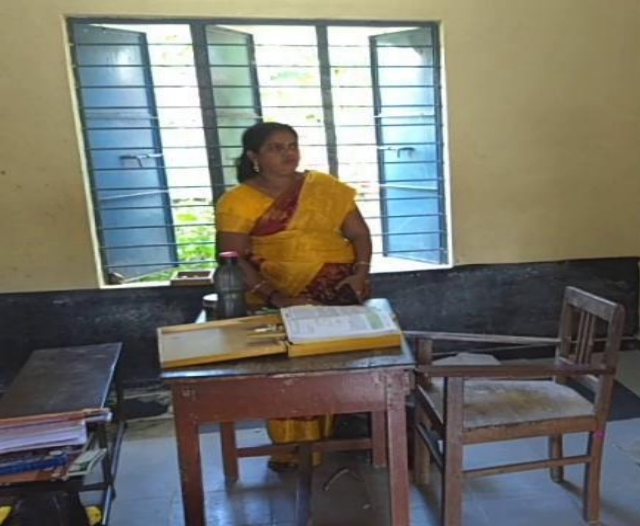
Outdated Curriculum : As per inputs from the Teacher Kavita, the curriculum followed is outdated, impractical and useless for the emerging job markets. As a teacher, she is worried about the future of the students.
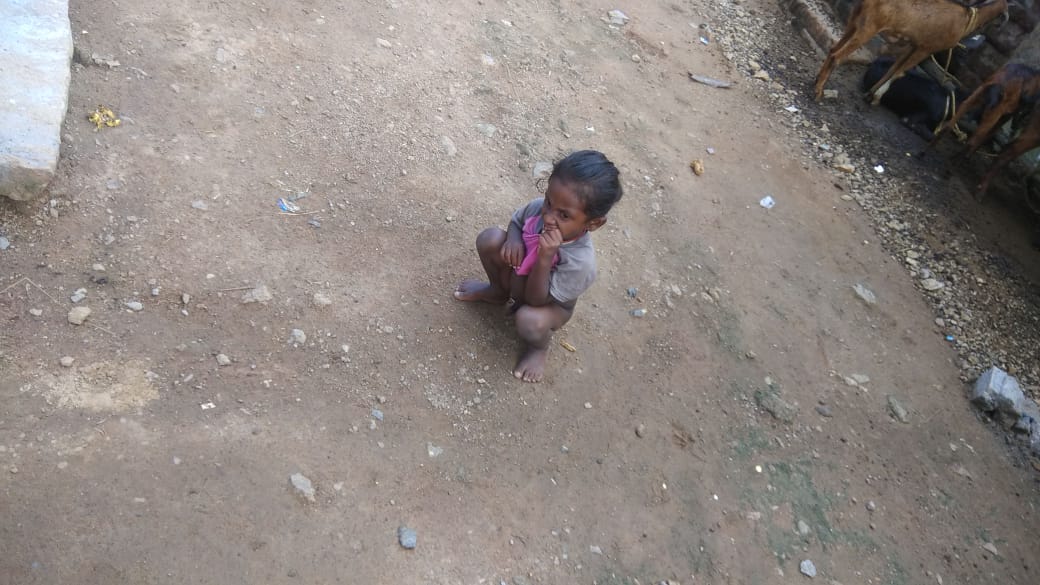
"There are high dropout rates among girl child as the parents don't have enough money or consider it a futile practice due to traditional socio-cultural factors."
"There are times when Government officers come to verify the Mid Day Meal Enforcement, but it is not done regular. The ration and other commodities required are not readily available and often less in quantity."
Kavita, the school teacher carefully explained the high dropout rates among girl child. She went on to explain about the way Mid Day Meal Scheme is enforced at the village. She feels that the surveillance of the scheme is either not initiated from the Government's end or it is not properly implemented.
The discussion is extended in the form of targetted focus groups consisting of teachers. The organizational structure is explained to them. Upon which, they acknowledge the protocols.
"...we have a Jio sim card and the internet charges are affordable now. If we have some online portal, we can report our discrepancies in the meal commodities."
They also express their desire to interact with online support forums if made available.
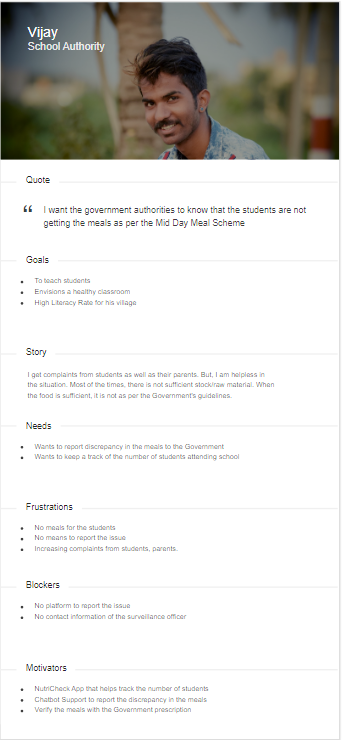
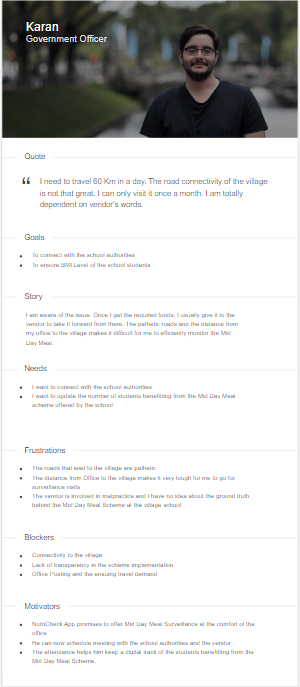
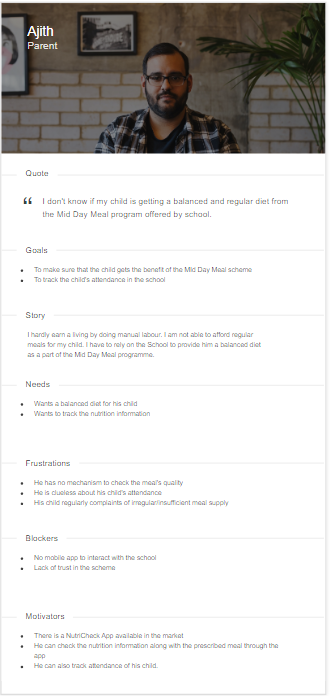
Based on the survey responses and the interview participants, I define target group profiles.
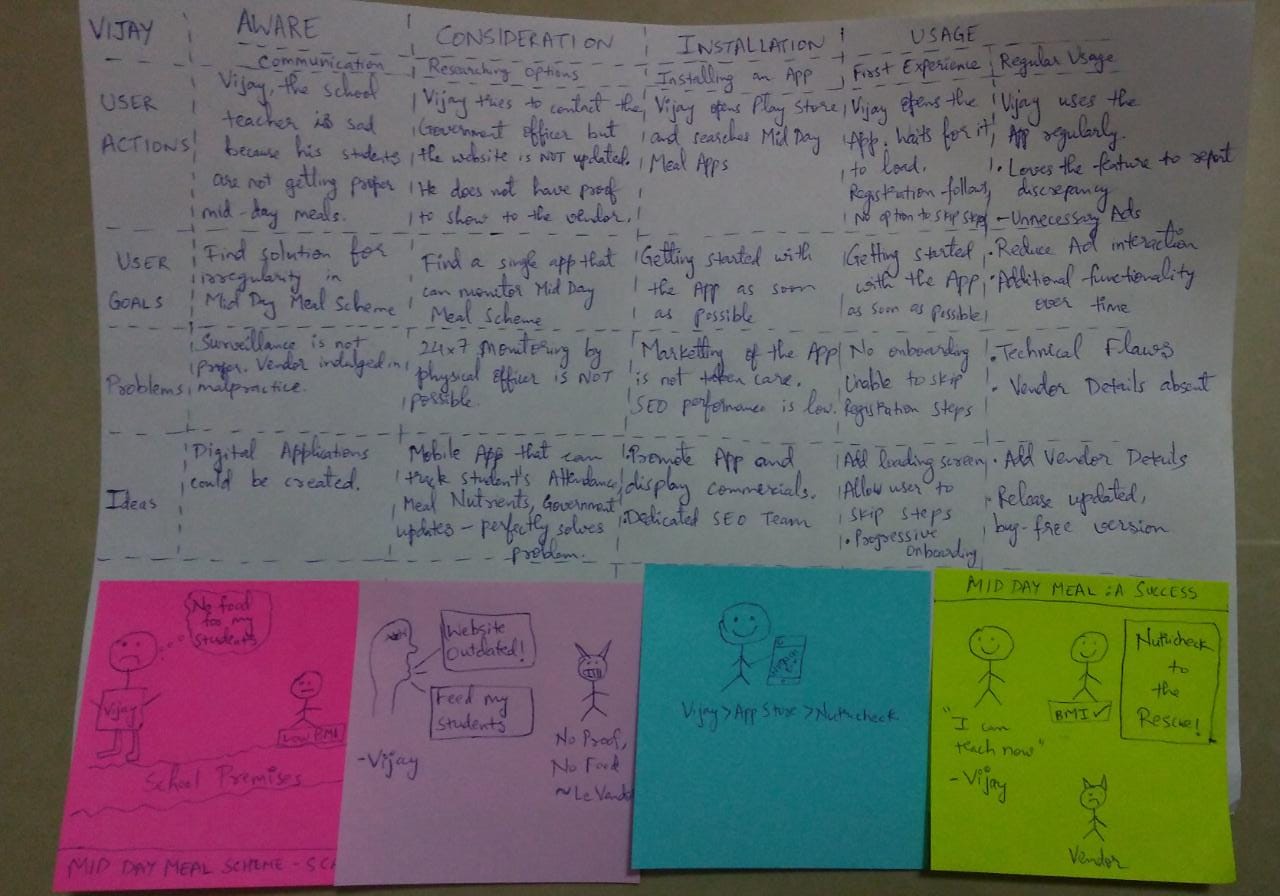
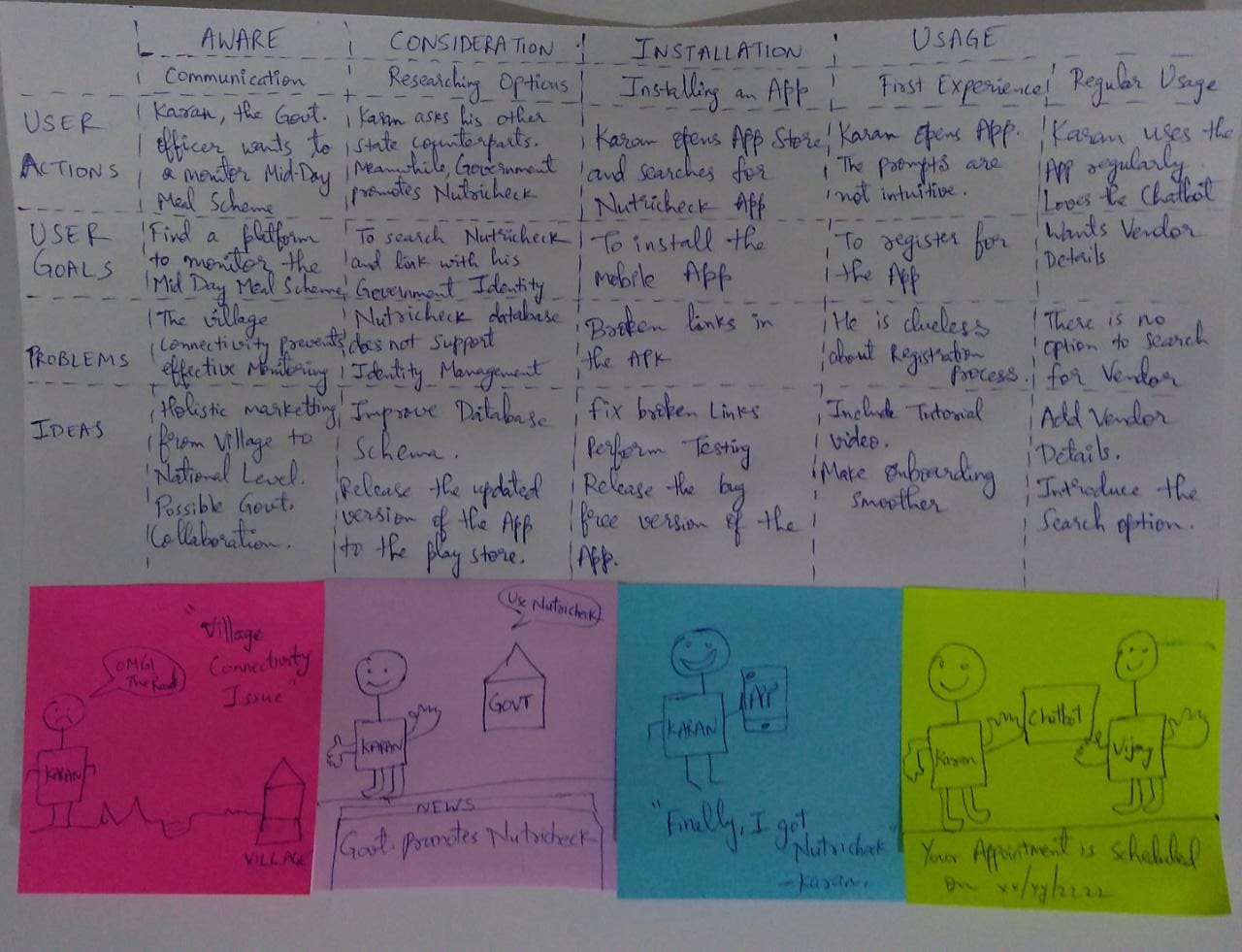
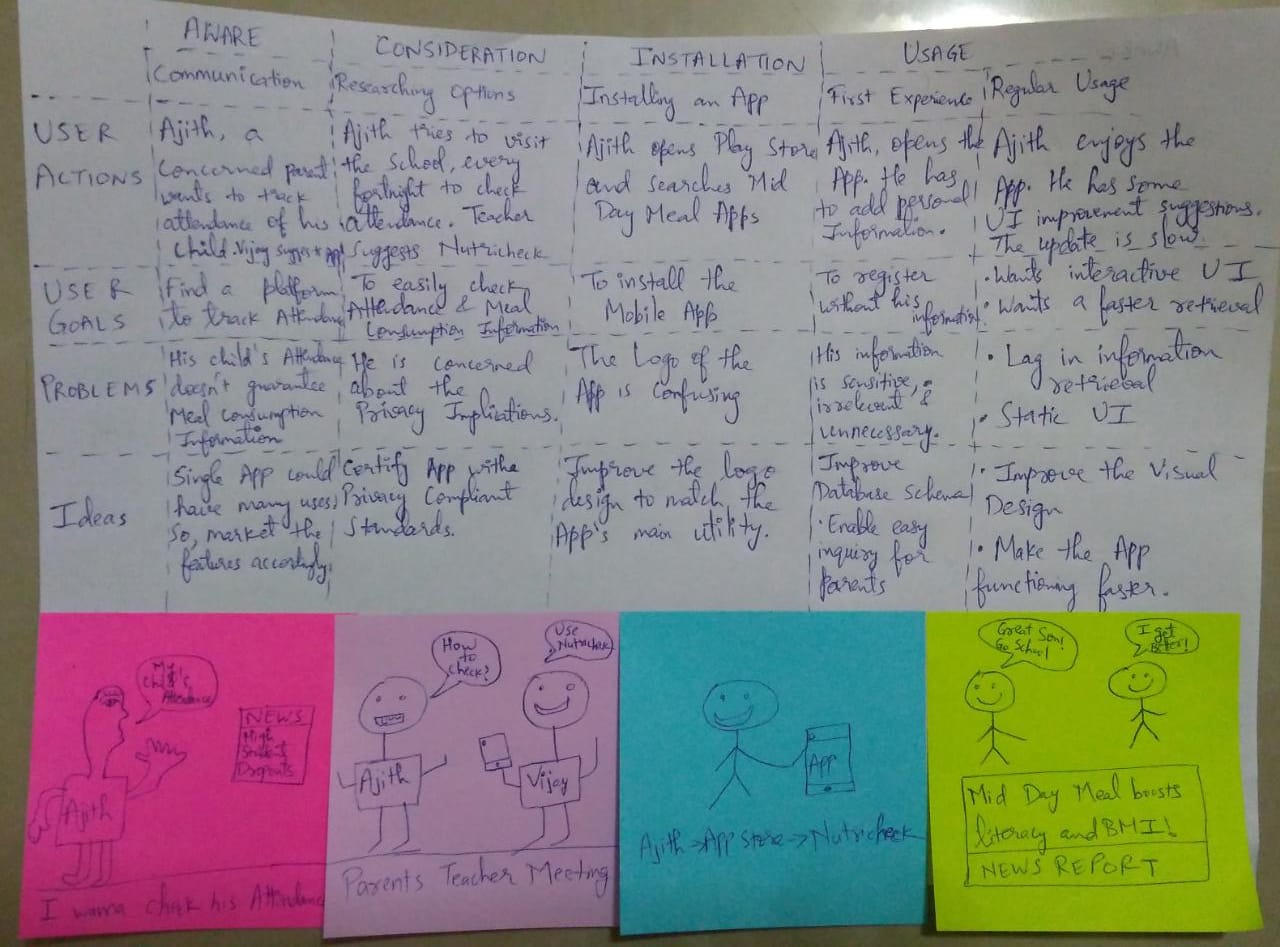
User Personas
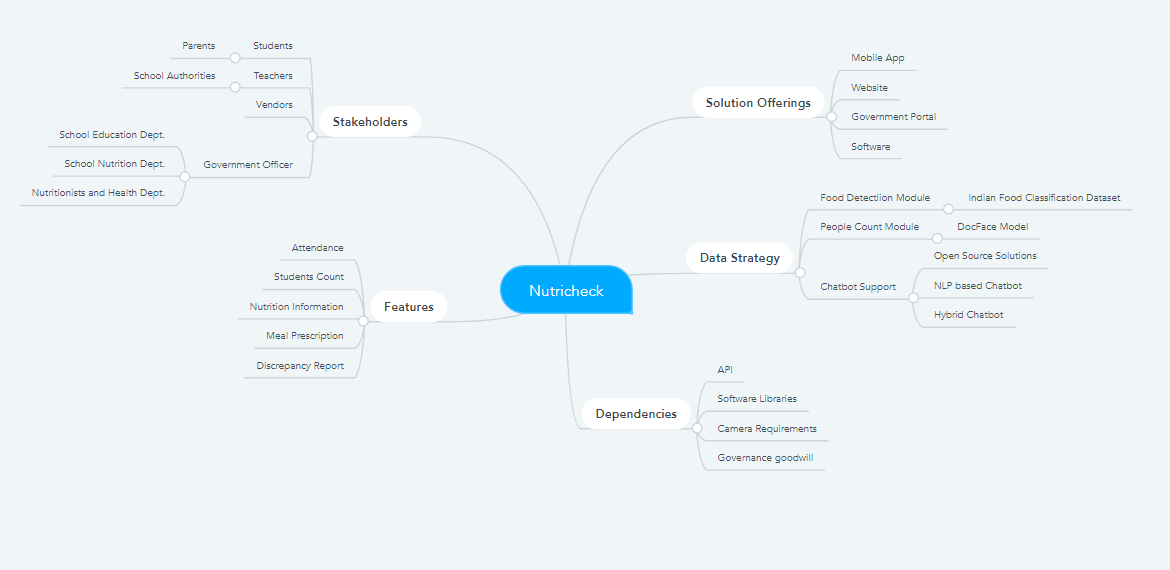
There are multiple stakeholders that would interact with the system. Following are the 3 target groups:
- School Authorities
- Government Officer
- Parents of the students
Product Mindmap
Customer Experience Map
Technical Implementation
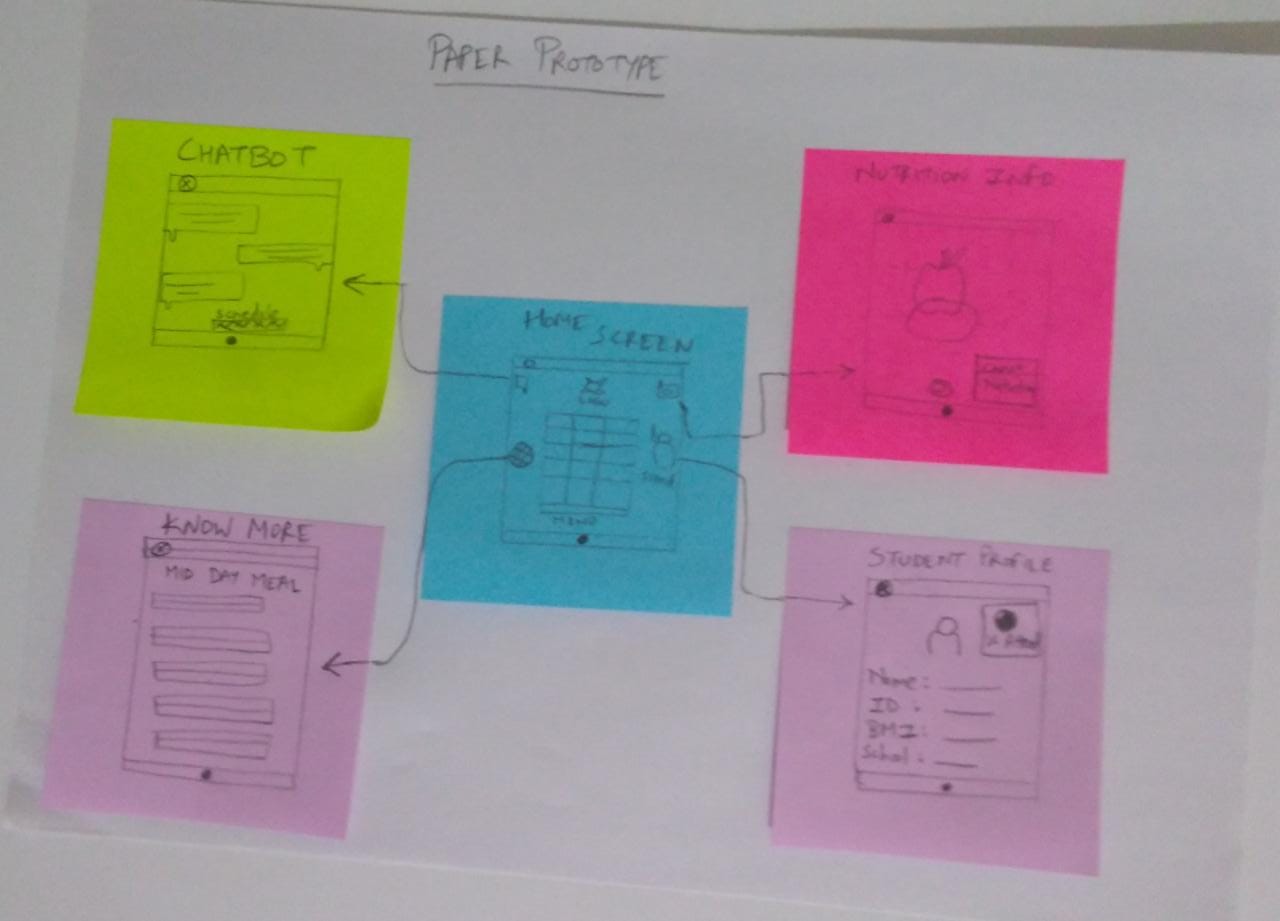
Design : Paper Prototyping for the App version
Low fidelity paper prototypes were created to define the navigational flow and low level details for the Mobile App version.
User Acceptance Test
Nutriton experts, Doctors evaluated the design for its relevancy and features. Qualitative Data was collected from them. The participants were shown App Design and the following Video.
Feedback
Doctor (32) from Bhavnagar:
"I liked the website. The Home Screen is simplistic, yet precise. For an App that displays nutritious information, Nutricheck does justice. This app design is apt to promote health and wellbeing."
Teacher (47) from Mahuva:
"Some of the issues and challenges are also faced here (in Mahuva). The system is promising and I would definitely like to use it if the Government approves it."
Conclusions
The technological advancements that we see around do not generalize at the village level. There is a considerable change in the mindset, lifestyle of the people depending upon their exposures to the resources.
Mid Day Meal Scheme requires interventions at the District and the School Level. The bureaucratic inefficiencies that happen at a regular basis are generally belonging to the same class.
The Infrastructure at the village level needs significant improvement in order to implement public welfare initiatives of the government. The road network, camera equipments have become basic requirement for all.
People find Chatbot as the most immediate and fastest way of scheduling an appointment.
Food Detection module needs more training on Indian food to be able to perform well in the Indian scenario.
With respect to the design:
Tutorial at the introduction is crucial for a smooth onboaring
Logo is the heart of the App for a first time user.
Learnings
People care about Privacy, irrespective of their socio-economic position, location. Privacy is basic right and fundamental in ethical product design.
Adoption of any tools and technology significantly depends on their discoverability, ease of access.
Self Disclosure: This was a group project. Other group member names and their role description follow: Shyam, Subham, Manas, Ishani, Samir, Mohit, Suhail. Website development was done by Subham. Suhail helped with the languge translation as the survey and interview responses were in Tamil, the first language of the village. Manas and Ishani were involved in Project logistics, protocols. Samir and Mohit searched various alternatives for Chatbot.
Project Image Credit : DNA India