As per a report from Acquire, today, approximately 1.4 billion people use Chatbots for information retrieval in their day-to-day lives. Chatbots provide easy access to the most common information related to anything! With the advent of Natural Language Processing, it has become easier to generate conversational text - making the chatbot more humane. This progression is further magnified, thanks to the hardware advancements. The processing capabilities have made it possible to train upon several Gigabytes of linguistic corpus for the language generating models to learn from. The capability of Chatbots to converse in native regional languages has increased its market. Developers have cracked this code of making 'inclusive' chatbot.
Where it all started?
ELIZA was the first Chatbot created in 1966. The initial version was a failure but it initiated a conversation among fellow innovators to think towards this line of research of making systems talk to humans. ELIZA was developed by Joseph Weizenbaum, the german scientist from MIT. It was developed to imitate therapist to answer open ended questions and also to reply to the follow up questions.
Where it is today?
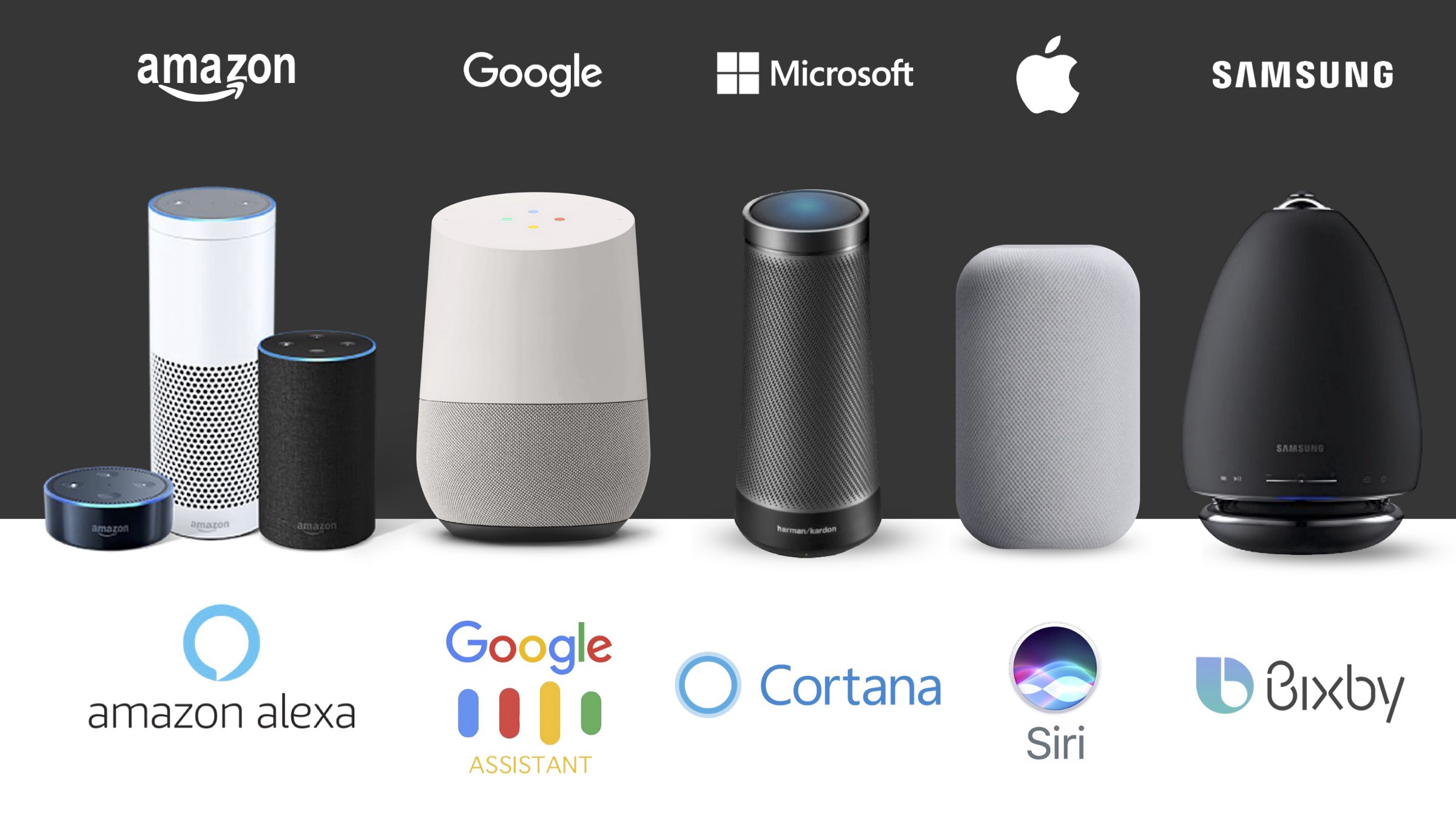
"Okay Google","Hey Siri" - Did you relate this to the company Google/Apple. If your answer is yes than you should thank the Deep Learning models that run voice commands. Introduction of voice has given a whole new dimension to the Chatbots. Google and Siri are almost family members now. The plethora of applications that are governed by large scale technology conglomerate has expanded the utility of the Chatbots. And as a result, the market share of the Chatbots have also increased significantly.
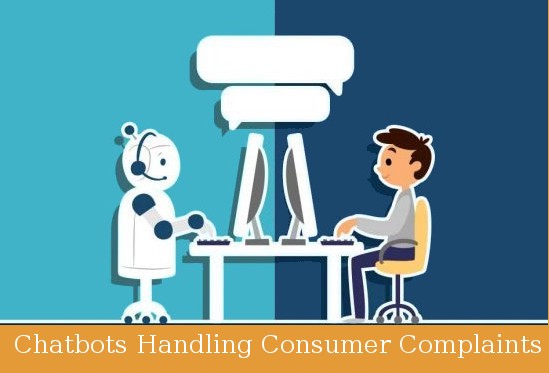
Chatbots for Complaint Redressal : Chatbots have become the go-to tool for Complaint redressal. Name Entity Recognition, Tokenization and other text processing have made it faster to parse the user pain points. Chatbots are smart to redirect them to appropriate solution. It has reduced the cost of hiring customer call executives and consequently the burden for the companies. This is also reflected in the estimates of Chatbot investment in the upcoming years.
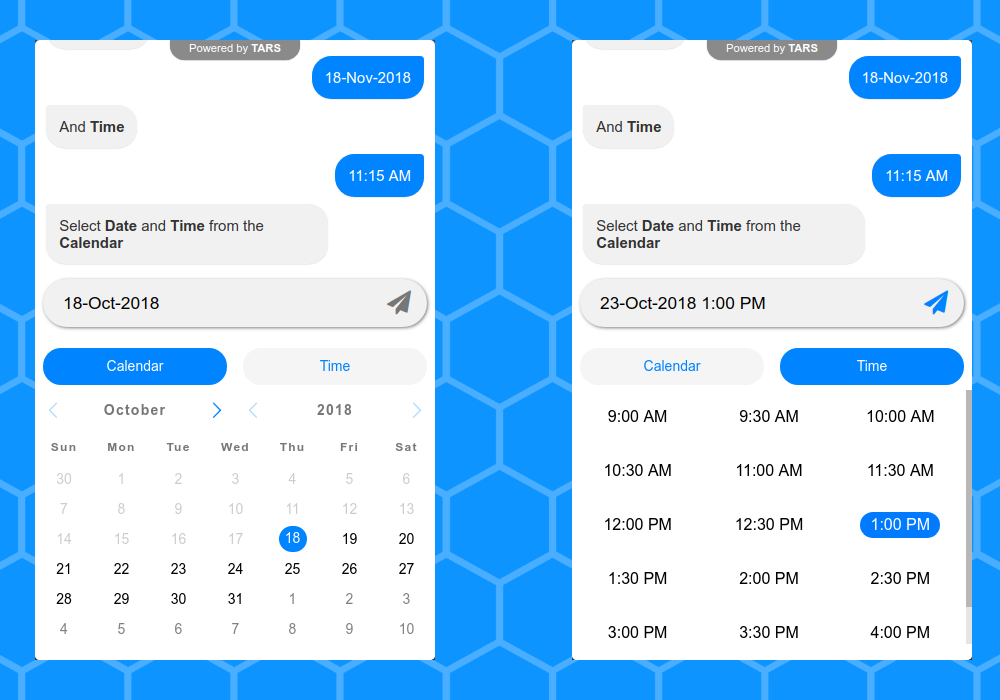
Chatbots for booking an appointment : There are several open source Chatbot platforms that provide appointment booking and schedule management. Mail integration and calendar management make it very easy to schedule an appointment using Chatbot. The ability of a Chatbot to give a reminder is yet another reason for people prefer to book appointments on Chatbot.
Now, think again...
The innovation in Chatbot has made it obvious for the developers to make it and for the people to rely on it. But ask yourself this question:
Has society accepted Chatbot for all the features discussed above?
Should society consider Chatbot as the ultimate solution, a panacea for all their questions?
If your answer is Yes, to any of the above questions, please reflect on the letters in bold.
Which society are you talking about?
There is a chance that you would be considering your immediate family, friends, relatives, colleagues, etc. staying in resourceful environments.
Society, as a whole, also includes people who live below poverty line. The research and innovation in access to smartphones have propogated the advantages of ubiquitous computing. But, consider extreme socio-economic distress. Global South markets including Africa, India, Bangladesh, Pakistan, Thailand still don't have access to a smartphone. These sections of society were silent spectators witnessing advancement in Chatbot - a system that is only designed for the privileged ones.
Chatbots are being created from the 1960s. Neverthless, as per WHO in the year 1990 - about 36% of the world's population or 1.89 billion people lived below the global poverty line. It is clear that the economically weaker sections of the society have only dreamt of Chatbot.
Do Chatbots exist for those having feature phones?
The answer to this is MAYBE. Interactive Voice Response (IVR) offers few of the features like Information Retrieval, Complaint Redressal, etc.
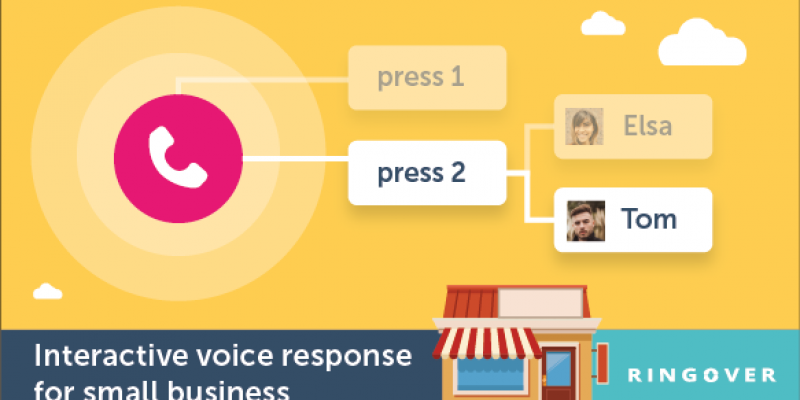
Unfortunately, IVRs have not enjoyed the privilege of innovation. IVR Research has been limited to finding optimal navigational flow and conversational enhancements. The root cause to this is the perception among developers. Most of the Computer Science students at the Universities are habituated with using Chatbots and many have not used IVR at all. They only have exposure towards Chatbot. So, that draws a unilateral research direction, biased to favour the rich.
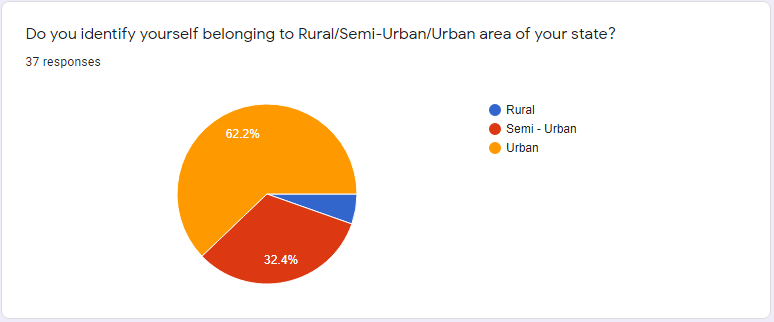
I conducted a survey of people's interaction with IVR and their perception of Chatbot as an alternative. I took the case of Complaint Redressal, since both IVR and Chatbot are used significantly for addressing to the complaints. And the former is considerably comfortable too, encouraging people belonging to the upper strata. I tried to cover diverse set of students. I assumed that even urban students might at least have had some interaction with the IVRs at some point of time in their lives. To my utter surprise, many people have not come across IVRs in their life!
A 22 year old, Computer Science student belonging to urban area (self-identified)
First of all, what is this IVR?
Findings of the Online Survey :
Survey was structured and designed to trigger user pain points in IVR Design. In order to cover diffferent demographics of people, participants were selected using snowball sampling. Those people who were unaware about IVR or its functioning were given a live tutorial and a video demonstration to give them contextual information.
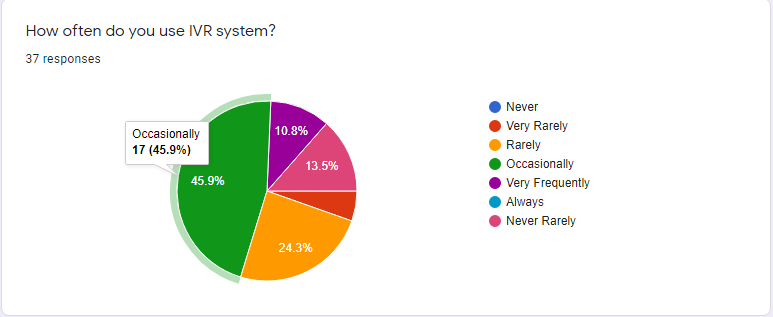
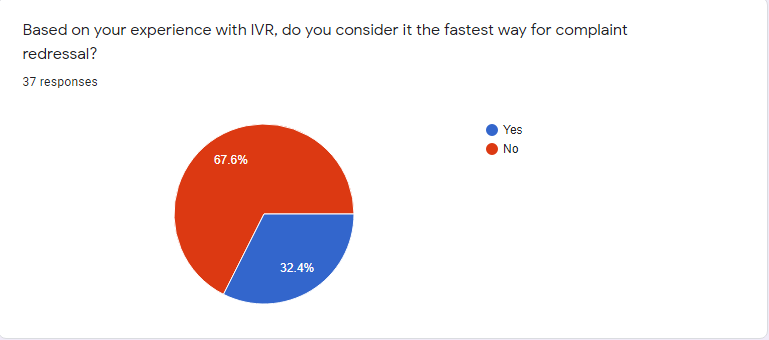
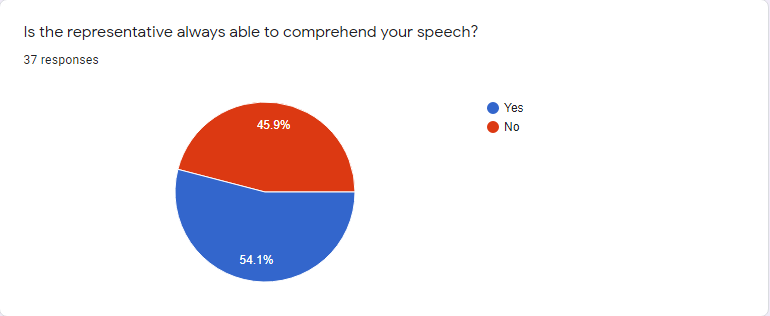
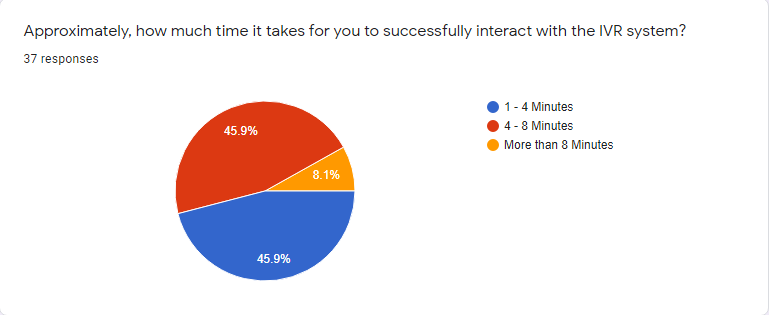
IVRs are notoriously lengthy and time consuming exercise to lodge a complaint. This is evident from the survey.
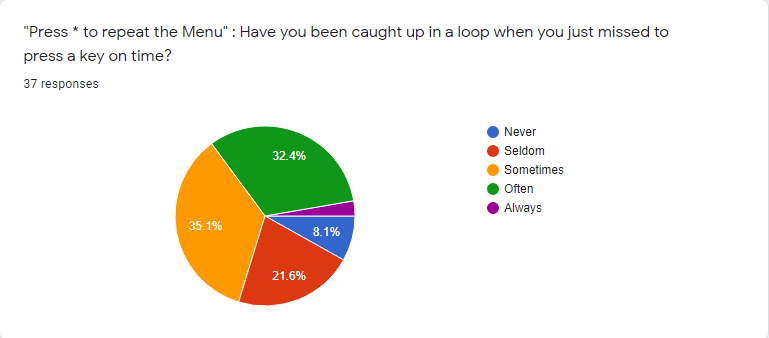
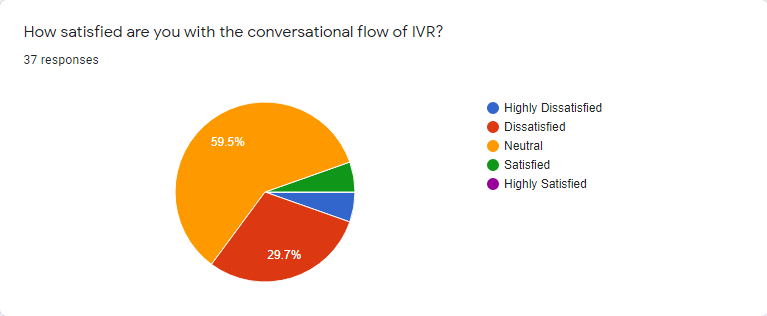
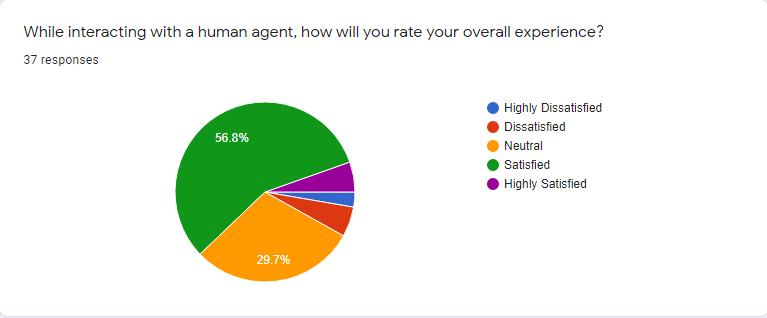
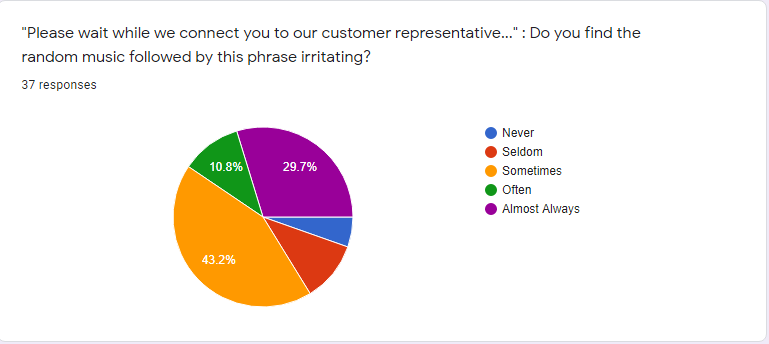
More than 50% of respondents are disturbed by the random music while interacting with the IVRs. This gives some room for improvement. With voice based Deep Learning models, there is a scope of a novel solution that gets rid of the music and wait.
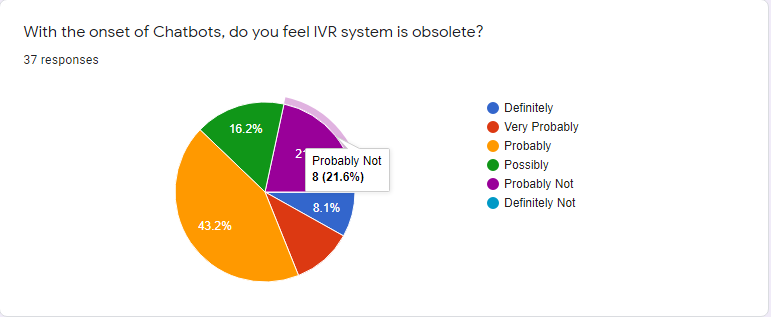
Just over 10% of respondents believe that Chatbot would not make the IVRs obsolete. Remaining have moderate to severe apprehension about IVRs future.
What lies ahead?
Conversational IVRs are the next generation of IVRs offering some novelty in its functioning. Leveraging the power of Artificial Intelligence, it reduces latency in the IVR system. The NLP based techniques are used to parse the text transcribed from the voice input of the user.
Ironically, it is the same algorithms imbibed with the spirit of social good. It takes a conscious effort to harness the spirit of social upliftment and to make world a better place to live.
Image Credits:
IVR: https://www.ringover.com/blog/interactive-voice-response-for-small-businesses
Book Appointment via Chatbot : https://hellotars.com/blog/meeting-booking-chatbot-conversion/
Chatbot for Complaint Redressal : https://onlineconsumerforum.medium.com/efficiency-of-chatbots-to-handle-consumer-complaints-online-for-quick-solution-94e536e4651b
Chatbot Family : https://medium.com/voice-tech-podcast/voice-the-rise-of-the-third-platform-and-why-it-matters-db4399b787f8